1st CU-Lock Haven biological sciences graduate student has research published on Spotted Lantern Fly
LOCK HAVEN, Pa. (12/19/2025) — The spotted lantern fly, the seemingly inescapable pest found throughout Pennsylvania, has the potential to decimate Pennsylvania's wine industry. Daniel Taratut, a 2024 graduate of CU-Lock Haven, is a published and award-winning researcher who may have discovered a way to curb the colorful pest's infestation.
Taratut arrived at the Lock Haven campus in 2022 following an introduction to Dr. Barrie Overton, CU-Lock Haven faculty member, by one of his former Temple University professors, where he completed his undergraduate degree. There, he became the first master's student in biological sciences at the CU-Lock Haven campus.
The introduction was spawned from the work Taratut had been helping with on the spotted lantern fly (SLF) while working at Temple in the lab with Dr. Brent Sewall.
"When I first learned about the spotted lanternfly's rapid spread across the eastern U.S., I was fascinated by how little was known about its microbial ecology," Taratut said. "While working as a research technician at Temple's Ambler Field Station, I noticed fungal contamination on stored egg masses and became curious about what methods existed to manage this pest long term. After attending the Spotted Lanternfly Research Summit and hearing researchers discuss emerging biopesticide strategies, I knew this was something I wanted to explore further."
At CU-Lock Haven, Taratut aimed to work with Overton to further pursue his research on the SLF. With Overton's lab being funded from external grants to study white-nose syndrome in bats and fungal taxonomy, Taratut sought funding for his research and found it through the Mycological Association of Washington, D.C., the Western Pennsylvania Mushroom Club, the Commonwealth University of Pennsylvania Biologists (CPUB), and the Entomology Society of Pennsylvania.
Taratut formed a graduate committee consisting of Dr. Amy Kutay entomologist; Dr. Joseph Calabrese, microbiologist; Dr. Sewall, Temple University ecologist; Dr. Joseph Calabrese, biologist; and Dr. Overton, mycologist and PI (principal investigator). Based on the literature review, Taratut and his committee identified a need for research on SLF egg masses and fungal entomopathogens (insect-killing agents), as no other current investigations were found related to this specific topic.
Taratut showed for the first time that naturally occurring organisms can grow on spotted lanternfly (SLF) eggs. Using a special type of fluorescent microscope, he could see and measure this growth and then compare it the number of eggs that successfully hatched. He then collected many types of insect-killing fungi from the field, identified them using DNA testing, determined how to safely and cleanly apply them to egg masses in the lab, and then measured the hatch success rate.
"One of the most exciting discoveries was that spotted lanternfly egg masses naturally harbor several fungi and we found a strong negative correlation between fungal colonization and hatch success, meaning higher fungal presence was associated with lower egg viability," Taratut said. "We also developed a staining method to visualize fungal growth on the dark, wax-coated SLF eggs, which proved to be a breakthrough for quantifying early colonization that other stains could not detect."
Using new statistical methods he learned while taking classes at the Bloomsburg campus, along with help from researchers at Temple, he discovered that two types of fungi can greatly lower the number of eggs that successfully hatch. This is an important result because reducing spotted lanternfly numbers by just 35% each year could make a big difference in protecting Pennsylvania's wine, agriculture and plant-based industries.
"Daniel's work in Dr. Overton's lab stands out because it lays the groundwork for a new biocontrol strategy for the spotted lanternfly, which in recent years has become an important, invasive species of insect pest that continues to spread across North America," Sewall said.
Taratut earned a first-place award for research presentation in a juried exhibition of his research at CPUB and a monetary award from his presentation at Duke University, both in graduate student sessions.
Since all of Taratut's research so far has been conducted in a lab at CU-Lock Haven, the next step is to test these findings in the field to better understand how these fungi affect SLF egg masses in real-world conditions. His success demonstrates the power of community and collaborations across the CU campuses.
Following his graduation, Taratut's research was published on Sept. 25, in Biocontrol Science and Technology (https://doi.org/10.1080/09583157.2025.2561205). He was also recently nominated for a "best researcher" award for the Global Scientist Day Awards and is now teaching in Colorado and applying to doctoral programs.
"My time at CU-Lock Haven was incredibly formative. I had the freedom to take an idea that started with a simple lab contamination event and turn it into a publishable research project with real-world implications," Taratut said. "The support from faculty, peers and external collaborators was exceptional, and it reinforced how collaborative and curiosity-driven science can be. Publishing my first first-authored paper through this project was a milestone I will always be proud of."
"I am currently exploring opportunities to conduct field-based trials applying entomopathogenic fungi directly to egg masses in their natural environment, and I hope to join a Ph.D. program soon," Taratut said. "More broadly, I am interested in continuing research that connects microbial ecology to invasive species management, especially in ways that bridge laboratory science with applied environmental outcomes."
Media Attachments
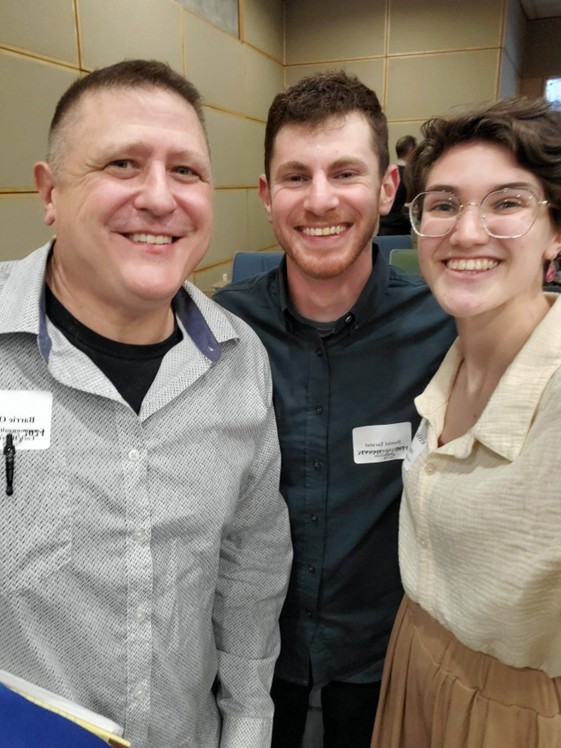
From left, are Dr. Barrie Overton, Daniel Taratut and Abby Ireland at the Mid-Atlantic State Mycology Conference held at Duke University, where both Taratut and Ireland were recognized for their research presentations with a monetary award. Ireland is a mycology University of Tennessee, Ph.D candidate and former Lock Haven undergraduate student in Overton’s lab.
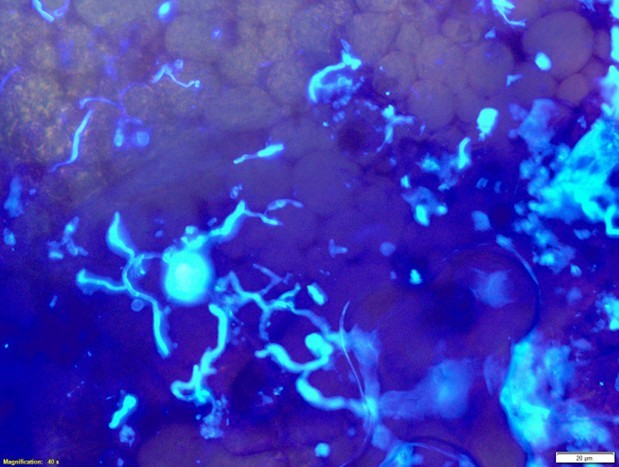
Fungal mycelium observed using advanced microscopy techniques on SLF eggs.
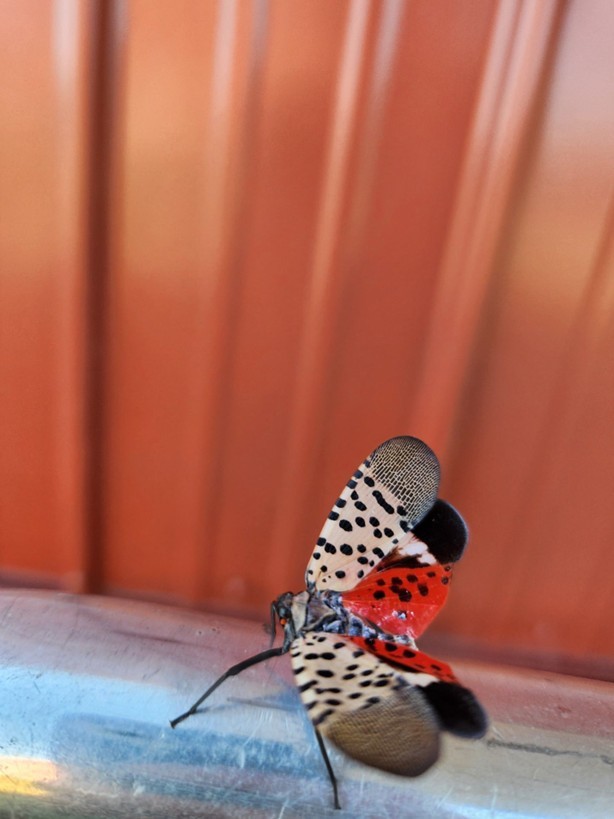
Spotted Lantern Fly observed at Happy Valley Vineyard & Winery, State College. SLF endangers the wine industry in Pennsylvania.